
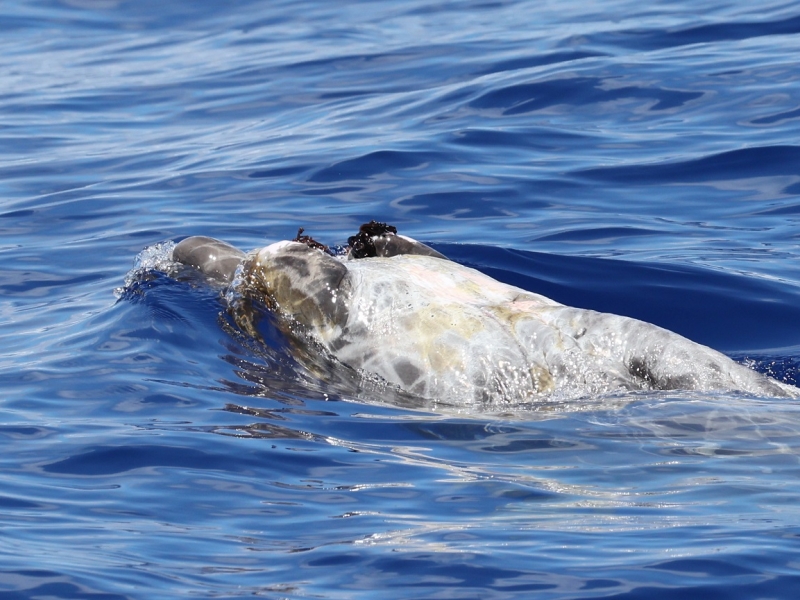
Kaua‘i field project - August 2026
August 25, 2026
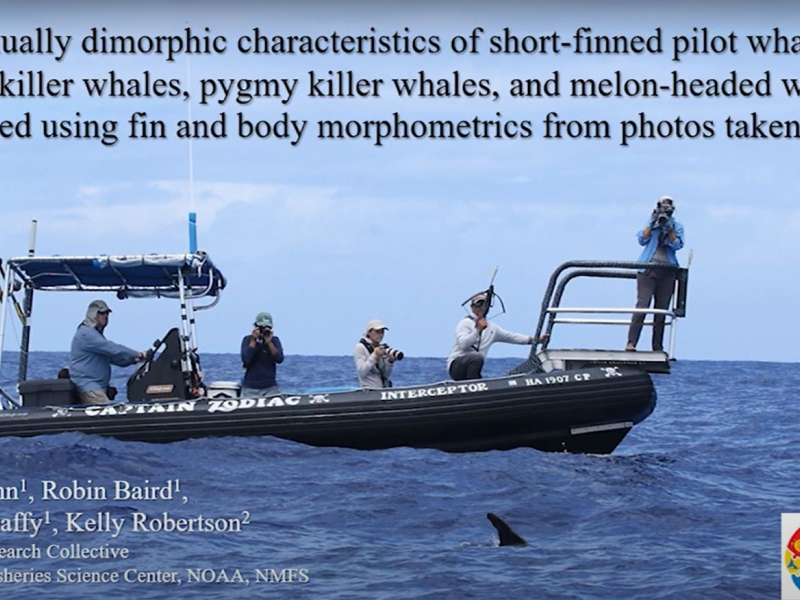
Researchers from Cascadia Research Collective are conducting a 9-day field session off Kaua'i to deploy LIMPET satellite tags on odontocete cetaceans prior to a Submarine Command Course (SCC) to be able to examine their behavior before, during, and after the training event. Click on the image below to see daily updates from the field.
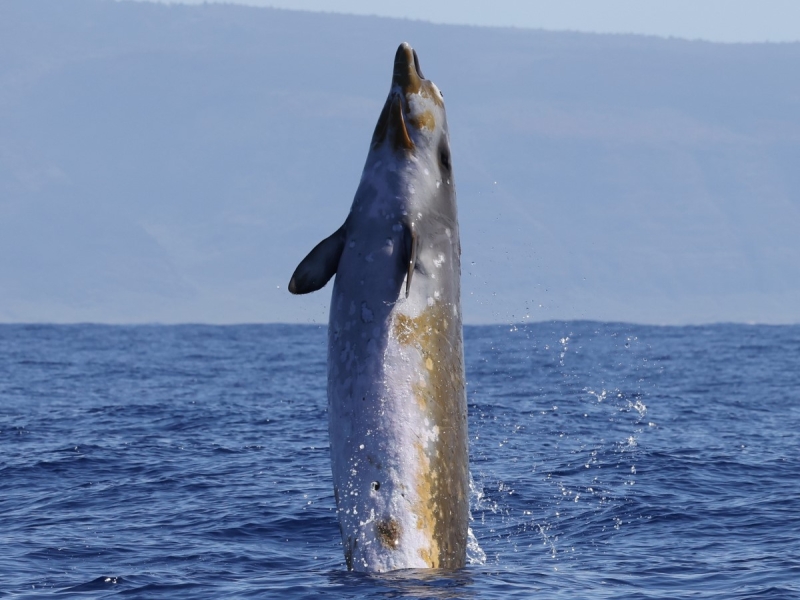
Kaua'i Field Work Updates
February 20, 2025
Scientists from Cascadia Research Collective recently completed a ~9-day field project off Kaua’i that started on February 9th. This project is timed to occur prior to a Submarine Command Course (SCC) training event. The primary goal is to deploy satellite telemetry tags on multiple species of odontocete cetaceans prior to the SCC, to be able to examine their behavior before, during, and after the event. This approach has been very successful in the past as a way of examining how different species respond to Navy training activities including mid-frequency active sonar (MFAS). Click through the picture below to see daily updates.
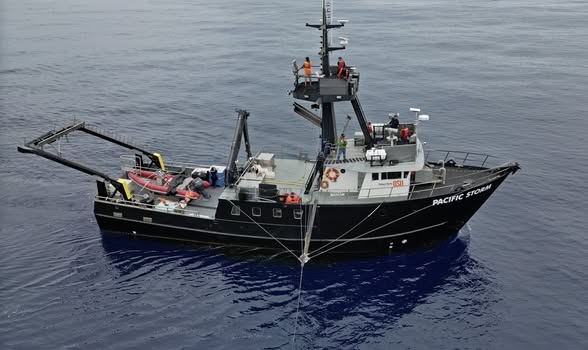
Mesoplodon mysterioso
June 13, 2024
We are thrilled to be part of the "Mystery Mesoplodon Expedition" off the west coast of Baja California searching for an elusive new species of beaked whale. Read about the initial discovery and stay tuned for updates on this exciting expedition!
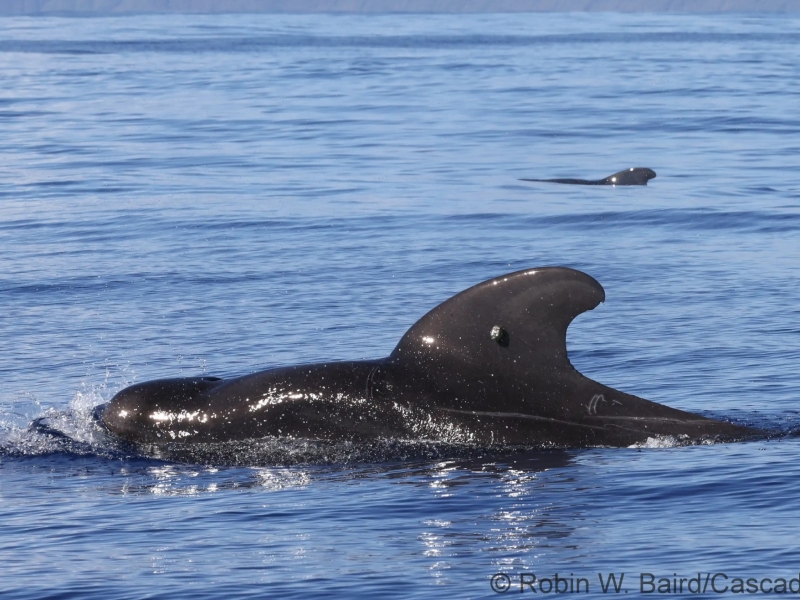
Kauai' Field Work Updates
February 16, 2024
Scientists from Cascadia Research Collective are leading a ~9-day field project off Kaua’i that started on February 11th.
August 2022 Kaua‘i Field Project
August 18, 2022
Cascadia Research Collective began an 8-10 day field project off Kaua’i starting on August 16th. This project is timed to occur prior to a Submarine Command Course (SCC). Their primary goal is to deploy LIMPET satellite tags on one or more species of odontocete cetaceans prior to the SCC, to be able to examine their behavior before, during, and after the SCC. This approach has been very successful in the past as a way of examining how different species respond to Navy training activities including mid-frequency active sonar.
Current
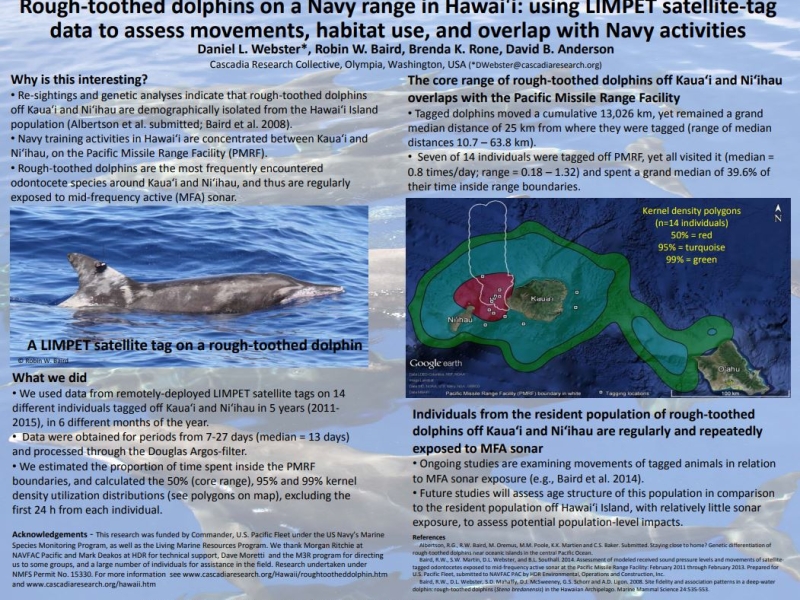
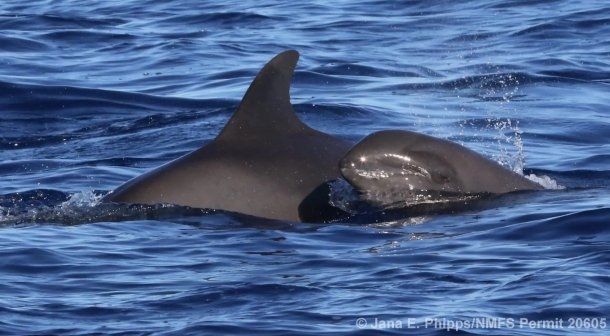
Pilot Project to Assess Feasibility of Multi-Sensor Tagging of Rough-Toothed Dolphins at the Pacific Missile Range Facility (PMRF)
Project Objectives
Determine feasibility and efficacy of deploying high resolution multi-sensor tags on rough-toothed dolphins at PMRF and determine how collected data can be used to move toward a better understanding of the effects of Navy activities, ultimately leading to PCoD modelling.
Current
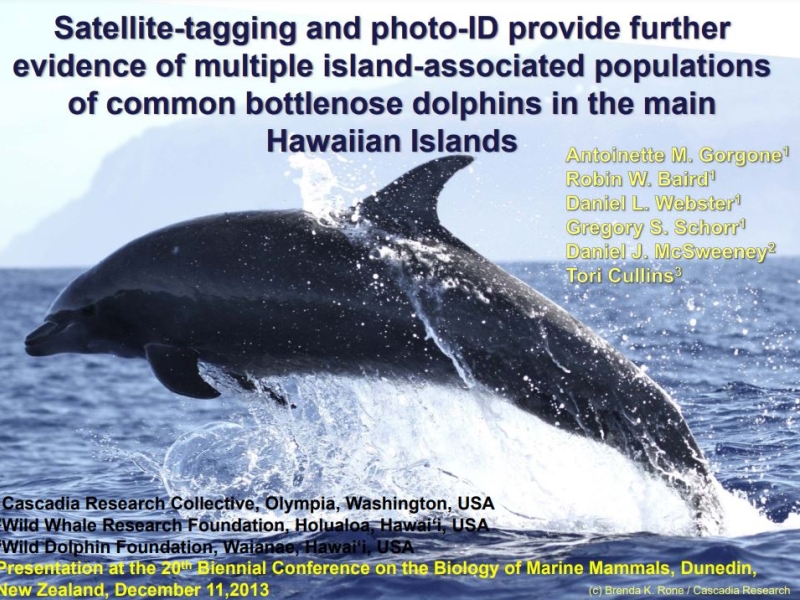
Visual Survey and Tagging of Hawaiian Odontocetes
Project Objectives
(1) define the spatial movement and habitat use patterns of species that are exposed to mid-frequency active (MFA) sonar (2) determine how these patterns influence exposure and potential responses
Complete
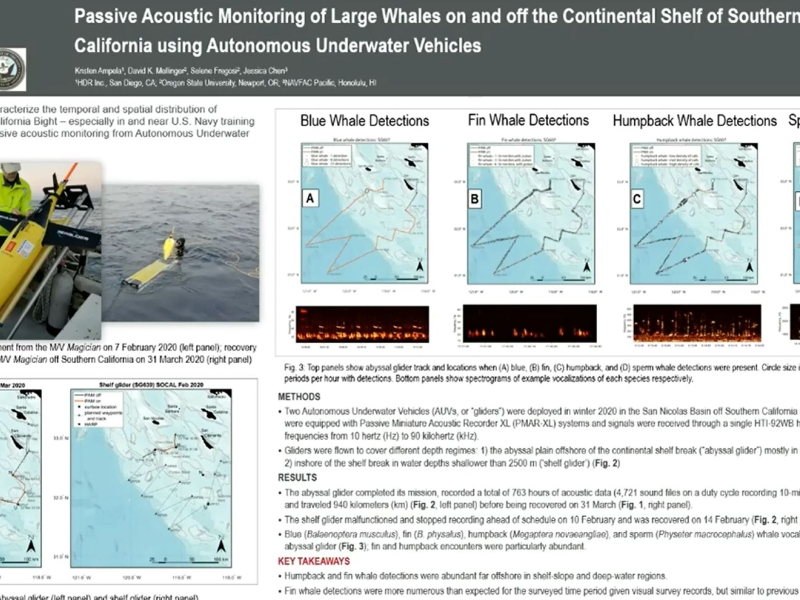
Passive Acoustic Monitoring of Marine Mammals Using Autonomous Underwater Vehicles in Southern California
Project Objectives
Explore presence of marine mammals in less-surveyed, offshore areas
Complete
Pacific Islands Marine Mammal Stranding Diseases
Project Objectives
Determine cause of death when cetaceans strand to ensure accurate public understanding of stranding cause, with focus on infectious diseases
Current
North Pacific Marine Mammal Species Distribution
Project Objectives
Develop a North Pacific-wide species distribution model for cetaceans
Complete
Hawaiian Monk Seal Tagging
Project Objectives
Investigate potential impacts of naval activities on Hawaiian monk seals
Complete
Conservation Canine for Marine Mammal Scat Collection in Hawaii
Project Objectives
Test whether a K9 can be trained to detect and 'direct' boat drivers via changes in behavior to the scat of marine mammals in Hawaii
Complete
Accelerometry Tag Development
Project Objectives
Increase capacity and develop training for marine mammal monitoring in Hawaii utilizing non-invasive triaxial accelerometry biologging tags to quantify fine-scale behavioral and energetic responses of protected species to potential anthropogenic disturbance
Current
Marine Mammal Monitoring on Navy Ranges (M3R)
Project Objectives
Improve understanding of the long term trends in occurrence of marine mammals on the PMRF and SOAR ranges.
Current
Estimation of Received Levels of MFAS and Behavioral Response of Marine Mammals at PMRF
Project Objectives
Further our understanding of the Monitoring Questions: 1) What is the occurrence and estimated received levels of MFAS on 'blackfish', humpback, minke, sperm and Blainville's beaked whales within the PMRF instrumented range? and 2) What, if any, are the short term behavioral responses of 'blackfish,' humpback, minke, sperm and Blainville's beaked whales when exposed to MFAS/explosions at different levels/conditions at PMRF?
Current
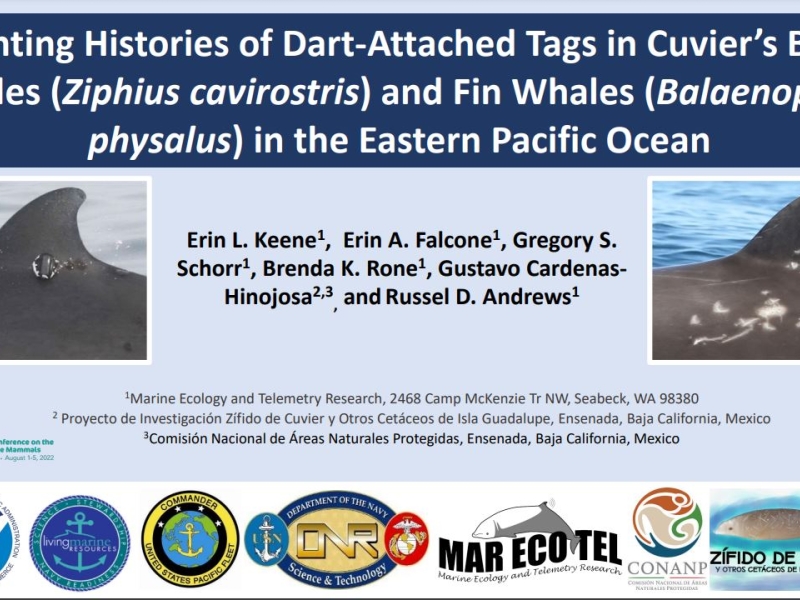
Goose-Beaked Whale and Fin Whale Population Dynamics and Impact Assessment at the Southern California Offshore Antisubmarine Warfare Range (SOAR)
Project Objectives
Improve knowledge of baseline population demographics, vital rates, and movement patterns of Cuvier’s beaked whales and fin whales. Examine what, if any, short term behavioral and/or vocal responses occur when exposed to sonar or explosions at different levels and conditions. Determine if exposure to sonar or explosives impact the long term fitness and survival of individuals or the population, species, or stock
Current
Southern California Beaked Whale Occurrence (formerly "Passive Acoustic Monitoring of Marine Mammals in Southern California Range Complex (SOCAL)")
Project Objectives
Determine the distribution and temporal patterns of beaked whale occurrence in the waters within and outside the Southern California Range Complex (SOCAL). Use passive acoustic monitoring to determine what species are present in SOCAL and examine spatial and temporal patterns.
Complete
North Pacific Humpback Whale Tagging
Project Objectives
Determine the occurrence, movement patterns, and residency patterns of multiple humpback whale Distinct Population Segments within Pacific Ocean Navy Range Complexes
Current
Pacific Islands Comprehensive Stranding Investigations
Project Objectives
Conduct comprehensive investigations of stranded marine mammals throughout the Pacific Islands with emphasis on the Hawaiian and Mariana Island chains. This includes conducting necropsies of stranded animals, collecting and archiving samples, conducting disease screening, genetic testing, and analysis of historical data. The objective is to examine stranding patterns and causes of death for marine mammals in the Pacific Islands.
Complete
Guadalupe Fur Seal Satellite Tracking
Project Objectives
Determine the at-sea distribution of endangered Guadalupe fur seals and whether they travel through or utilize the offshore waters of the Southern California Range Complex and Northwest Training and Testing area
Complete
Blue and Fin Whale Satellite Tagging
Project Objectives
Determine the movement patterns, occurrence, and residence times of blue whales and fin whales within U.S. Navy training and testing areas as well as Biologically Important Areas along the U.S. West Coast
Current
Marine Mammal Sightings During CalCOFI Cruises
Project Objectives
Determine what species and populations of marine mammals are present in Southern California and estimate the abundance and density across seasons
Current
Long Term Acoustic Monitoring of Marine Mammals Utilizing the Instrumented Range at Pacific Missile Range Facility (PMRF)
Project Objectives
Improve understanding of the long term trends in occurrence of marine mammals (e.g., minke, humpback, fin, Bryde's, Blainville's) on the PMRF range. Examine what, if any, acoustic and physical behavioral responses occur to Navy activities.
Complete
Effectiveness of Navy Lookout Teams in Detecting Cetaceans
Project Objectives
Obtain data to characterize the potential exposure of marine mammals and ESA-listed marine species to Navy training and testing activities, evaluate the effectiveness of mitigation measures
Current
Pacific Marine Assessment Program for Protected Species (PACMAPPS) survey
Project Objectives
Identify species of beaked whales, odontocetes, and baleen whales that occur in the surveyed areas; Monitor marine mammal and sea turtle presence, distribution, and diversity in offshore waters; Develop a better understanding of marine mammal distribution, movement patterns, habitat use, population structure, and abundance; Develop reference library of visually-validated acoustic recordings of marine mammals.
Current
Behavioral Response Analysis of Two Populations of Short-Finned Pilot Whales to Mid-Frequency Active Sonar
Project Objectives
Utilize newly developed statistical methods from the Atlantic BRS project and apply them to all the satellite-tagged pilot whales from both the Atlantic and Pacific studies.
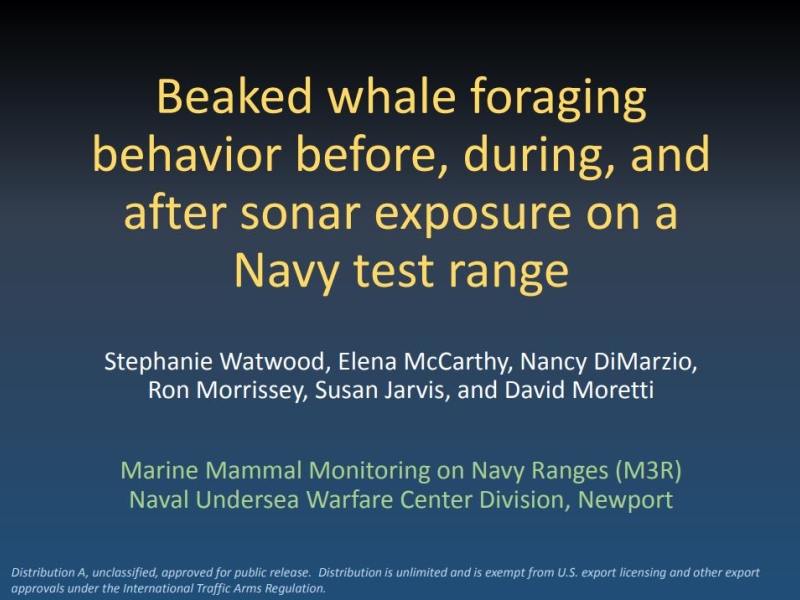
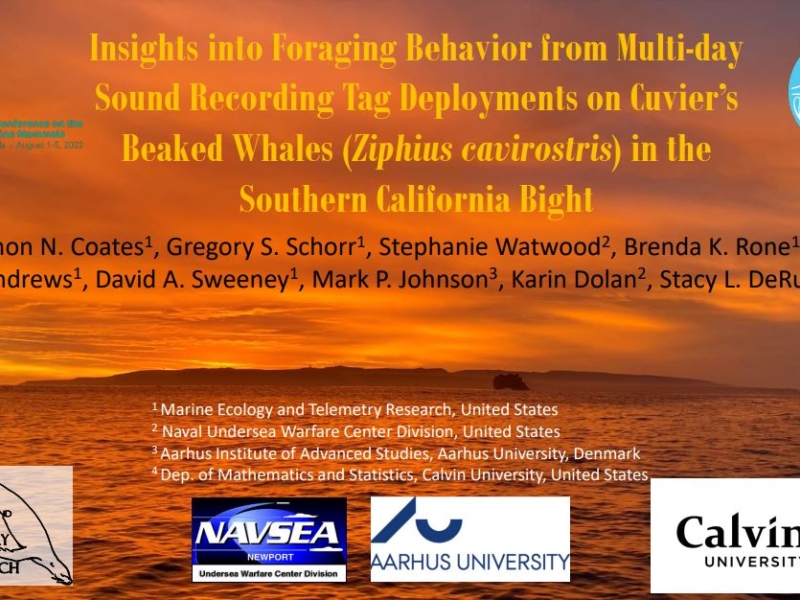
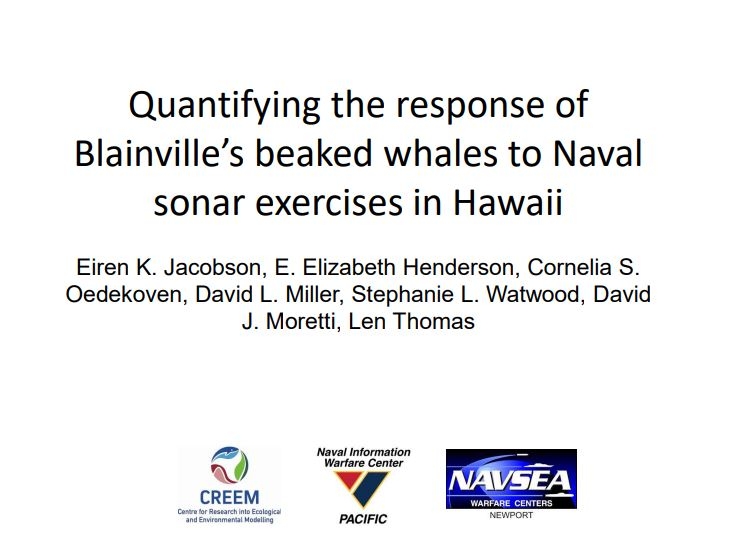
Effects of simulated military sonar on sound production by blue whales, sperm whales, Risso’s dolphin, and Cuvier’s beaked whale.
4th International Science Symposium on Bio-logging .
More details
Collapse details
Date Published:
Filesize:
- March 14, 2011
Whales and dolphins use sound for different functions including echolocation and social communication, and thus changes in sound production patterns are a likely component of any behavioral response to anthropogenic sounds such as military mid-frequency sonar (MFA). To simultaneously log whale and dolphin movements, sound production and reception, and anthropogenic sound exposure levels, we used Dtags (Woods Hole Oceanographic Institution) and bioacoustic probes (Greeneridge Sciences). Tags were deployed on wild, free-ranging cetaceans in Southern California waters. Tagged animals were then exposed to simulated MFA or, as a control, pseudo-random noise (PRN). In total, the August-September 2010 SoCal10 behavioral response study included 28 playbacks: 19 to blue whales (11 MFA, 8 PRN), 5 to fin whales (3 MFA, 2 PRN), 2 to a single sperm whale (1 MFA, 1 PRN), 1 to a Risso’s dolphin (MFA), and 1 to a Cuvier’s beaked whale (MFA). For this analysis we focus first on baleen whale call production and reception rates (particularly blue whale D calls and variable calls) in relation to sound exposure level, dive behavior, and lunge feeding rates. We then examine echolocation-based foraging behavior and social call production by the toothed whales as a function of sound exposure level. This rich dataset, including multiple cetacean species of conservation concern, provides insight into the wide potential range of responses to sound, and the dependence of those responses on ecological, social and behavioral context. Investigations like SoCal10 can help guide inferences for related topics, such as assessment of population effects of anthropogenic noise.
- 22.83 KB
Fine scale movements and swimming kinematics of blue whales off southern California including reaction to simulated military sonar.
19th Biennial Conference on the Biology of Marine Mammals .
More details
Collapse details
Date Published:
Filesize:
- November 27, 2011
The effects of anthropogenic sound on marine mammal behavior remains poorly understood, particularly with respect to fine-scale movement patterns. We exposed tagged blue whales to simulated navy sonar during the SOCAL10 behavioral response study in Southern California. We used two different high-resolution, suctioncup digital archival tags to examine fine-scale whale movement: DTAGs and Bioacoustic Probes. The Bioacoustic probe, which included a hydrophone, a pressure transducer, and a dual-axis accelerometer, allowed us to estimate speed and pitch. The DTAGs are equipped with stereo hydrophones, a pressure transducer, and three-axis accelerometers and magnetometers. These sensors allowed us to determine fine-scale movement in three dimensions and received levels of sound. Our study included 19 sound exposures, consisting of 11 playbacks of mid-frequency sonar and 8 control playbacks of pseudo-random noise. We analyzed 24 parameters related to dive and body kinematics for each dive before, during and after sound exposure. Statistical models were applied to assess the significance of changes in these parameters in relation to the received sound level and distance from the source to the whale. During some exposures there were increases in speed and changes in ascent behavior as well as an apparent displacement away from the sound source after the onset of exposure. However, no clear responses were seen in these behaviors for other exposures. Given the range of factors that can characterize behavior and the potential for infrequent or subtle reactions, these data highlight the need for sufficient baseline data and a comprehensive understanding of the behavioral (social interactions), ecological (prey distribution), and evolutionary (fight or flight) contexts in which assessments of sound effects are made. Blue whales produce low-frequency calls and have generally not been considered sensitive to mid-frequency sounds, however, the current study indicates they may respond under certain situations.
- 146.02 KB
More details
Collapse details
Date Published:
Filesize:
- July 8, 2026
Two projects, one in the Atlantic Ocean and one in the Pacific Ocean, have simultaneously collected data from satellite-linked tags from a large number of short-finned pilot whales (Globicephala macrorhynchus; 54 from the Atlantic and 140 from the Pacific (50 from from Kaua’i), Tables 1 and 2). Pilot whales were exposed to MFAS in both areas, either opportunistically during a biannual training event at the Pacific Missile Range Facility (PMRF) in Hawai.i, or during controlled exposure experiments (CEEs) associated with the Atlantic Behavioral Response (BRS) project off Cape Hatteras, North Carolina, where experimentally simulated or operational SQS-53C sonars from surface warships were used (Figure 1). In addition, all tagged animals have some additional data known about their social relationships and context. Off Cape Hatteras this includes at minimum the number of other animals in the group they were tagged with and some photo-identification information about the associated population; off Kaua.i this includes information known about social network-derived relationships in the island-associated population and potential individual exposure histories. These data, along with newly developed spatial movement modeling techniques (Hanks et al., 2015; Johnson et al., 2021) adapted to satellite-linked tag data, create a natural experiment to evaluate and understand possible behavioral responses of shortfinned pilot whales to MFAS exposures in two different populations and environments.
- 644.89 KB
More details
Collapse details
Date Published:
Filesize:
- January 14, 2015
On 13 and 14 May 2014, a team from the University of Washington conducted a set of measurements of the underwater sound generated by explosive charges as part of a naval training event conducted in the Silver Strand Training Complex off San Diego. Environmental measurements to support the acoustic research included measurements of sound speed versus depth showing a thermocline, and sea surface directional wave measurements. This team was joined by personnel from U.S. Pacific Fleet and HDR Inc., who conducted simultaneous observations of marine mammals.
- 2,104.68 KB
Multi-scale behavioral response studies of cetaceans and MFAS along the US East Coast.
SEAMAMMS (Southeast and Mid-Atlantic Marine Mammal Symposium) .
More details
Collapse details
Date Published:
- April 7, 2017
- 335.12 KB
More details
Collapse details
Date Published:
Filesize:
- July 8, 2026
This annual progress report covers the 2025 field season and subsequent analyses. It provides a synthesis of experimental methods; field efforts; tagging results; and exposure-response results for two CEEs, including the second operational CAS CEE conducted with the United States Ship (USS) Donald Cook and the first-ever high-power experimental source CEE simulating CAS operations. It also includes a detailed analysis of the Kinéis satellite data receiving system relative to legacy ARGOS systems. Finally, it includes a synthesis of peer-reviewed papers that have been or are in the process of being published.
- 9,688.83 KB
Behavioral responses of goose-beaked whales (Ziphius cavirostris) to simulated military sonar.
Ecosphere. 2026.
Volume17, Issue1
More details
Collapse details
Date Published:
- January 7, 2026